

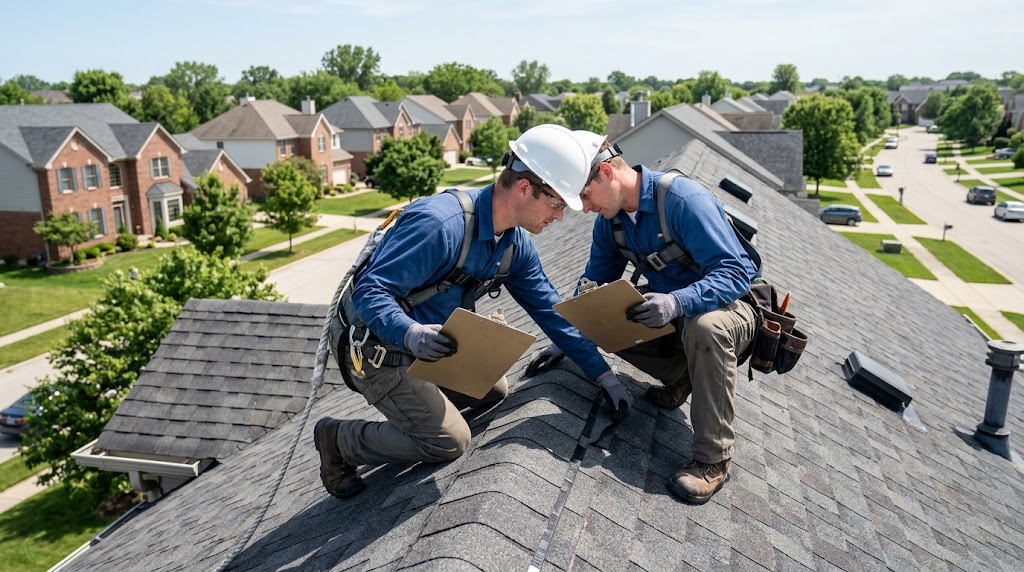
A roof rarely fails all at once. It’s usually a handful of small, quiet issues — a lifted shingle, a clogged valley, or flashing that’s pulled away from a chimney line — that go unnoticed until a ceiling stain shows up two rooms away from where the actual problem is. Roof maintenance is what catches those small things while they’re still cheap to fix. It’s also one of the first systems the HF Home team checks during routine property visits, since roof problems are easy to miss from the ground and expensive to ignore.
Roofing Materials: Lifespan and Common Failure Points
Different roofing materials age differently, which affects how often they’re worth inspecting and what to watch for:
| Roofing Material | Expected Lifespan | Primary Failure Point |
|---|---|---|
| 3-Tab Asphalt Shingles | 15–20 years | Wind uplift, granule loss, thermal cracking |
| Architectural / Laminated Shingles | 25–30 years | Pipe boot degradation, hail impact |
| Standing Seam Metal | 40–70 years | Fastener seal wear, thermal expansion leaks |
| Concrete / Clay Tile | 50–100 years | Cracked tiles under foot traffic, underlayment failure |
| Synthetic Slate / Composite | 40–50 years | Installation issues around valleys and flashing |
Why Roof Maintenance Matters More Than It Seems
A roof is built to withstand extreme elements, but “built to last” isn’t the same as “maintenance-free.” UV exposure, wind, rain, and debris work on it constantly, and most roofing materials degrade gradually rather than failing outright. Left unchecked, a small flashing gap can lead to saturated insulation, rotted decking, damaged soffit and fascia boards, and eventually mold — the kind of damage that turns a minor patch into a structural repair.
Preventive roof maintenance isn’t about eliminating every future repair — it’s about catching the predictable ones early, while they’re still a patch job instead of a full section replacement.
Roof Inspection Checklist
A basic inspection, whether done yourself or by a professional, should cover:
- Shingles or roofing material — curling, cracking, blistering, or missing pieces
- Flashing around chimneys, skylights, and sidewalls — loose sealant or gaps
- Gutters and downspouts — clear of debris and draining properly
- Valleys and low points — where debris collects and water pools
- Plumbing vent boots — the rubber collars around exhaust pipes, which crack with age and sun exposure
- Attic interior — damp rafters, dark staining, or daylight through the roof deck
- Soffits, fascia, and eaves — soft wood, bubbling paint, or signs of animal entry
Fine, dark granules collecting at the bottom of the gutters are worth noting too — a small amount is normal, but heavy buildup is a sign the shingles are losing their protective layer and nearing the end of their useful life.
What Preventive Roof Maintenance Includes
Preventive roof maintenance is less about major work and more about consistency:
- A visual inspection twice a year — ideally before winter weather and after the spring rainy season — plus a check after any major storm
- Clearing valleys, gutters, and downspouts of leaves, branches, and sediment so water drains as intended
- Trimming overhanging branches back from the roofline to reduce debris and prevent scraping
- Addressing minor flashing or seal issues promptly, before moisture works its way under the underlayment
- Keeping a record of inspections, repairs, and storm impact — useful for spotting patterns and for insurance purposes if a claim is ever needed
How Often Should You Inspect Your Roof?
Most homes benefit from a professional inspection twice a year — spring and fall — plus a visual check after any severe storm, high winds, or hail. Homes with heavy tree cover, coastal exposure, or extreme seasonal weather may need more frequent attention. Climbing onto the roof yourself isn’t necessary or advisable for a routine check — a ground-level visual inspection, or one done by a professional, is generally the safer and more reliable approach.
Early Warning Signs Worth Watching For
A roof usually gives some notice before a small issue becomes a bigger one:
- Shingles that are curling, cracking, or missing
- Granules collecting heavily in the gutters
- Water stains or discoloration on ceilings or upper walls
- Gutter overflow during light rain, which can point to a clog or slope issue
- Daylight visible through the attic roof boards
- A sagging area along the roofline
None of these mean a full replacement is needed — but they’re worth a professional look before the next storm makes the decision for you.
Repair or Replace? How to Decide
Not every roof issue calls for a full tear-off:
| Situation | Typical Recommendation |
|---|---|
| A few isolated shingles missing on a roof under 10 years old | Minor repair |
| A leak localized around a chimney or vent | Targeted flashing repair |
| Widespread granule loss or curling across a large portion of the roof | Full replacement worth considering |
| Roof is nearing or past its expected lifespan with recurring leaks | Full replacement typically more cost-effective than repeated patching |
A professional inspection is the most reliable way to know which situation applies, since surface-level damage doesn’t always reflect what’s happening underneath.
Roof Maintenance for Second Homes
A roof problem on a property you live in gets noticed fast — a stain on the ceiling, a draft, a leak during a storm. A second home near Lake Martin or a property tied to a Nashville-based owner doesn’t have that advantage. A displaced shingle after a storm can go unnoticed for weeks between visits, which is exactly when a repairable issue turns into a bigger one. This is where a dedicated Home Manager earns their keep — checking the roof during routine visits and coordinating a trusted contractor as soon as something needs attention, rather than waiting for the next scheduled trip to notice.
Frequently Asked Questions
How often should you inspect your roof?
Most homes benefit from a professional inspection twice a year, plus an additional check after any major storm, high winds, or hail.
What are the signs your roof needs repair?
Curling or missing shingles, heavy granule buildup in the gutters, water stains on ceilings, daylight in the attic, and a sagging roofline are all signs worth having a professional look at.
How can you extend the lifespan of your roof?
Regular inspections, prompt repairs for minor damage, clear gutters and valleys, and trimming back overhanging branches all help a roof reach or exceed its expected lifespan.
Is it safe to inspect your own roof?
Climbing onto the roof isn’t necessary for a routine check and carries fall risk. A ground-level visual inspection, or one done by a professional, is generally the safer approach.
Don’t Wait for the Leak
A roof rarely announces a problem loudly — it’s a stain here, a missing shingle there, easy to explain away until the damage has already spread. Regular attention is what keeps it a maintenance item instead of a major repair.
Ready to put roof inspections on someone else’s calendar? Contact HF Home Maintenance to book a Home Assessment that builds a maintenance plan around your property — one your Home Manager runs, not you.