

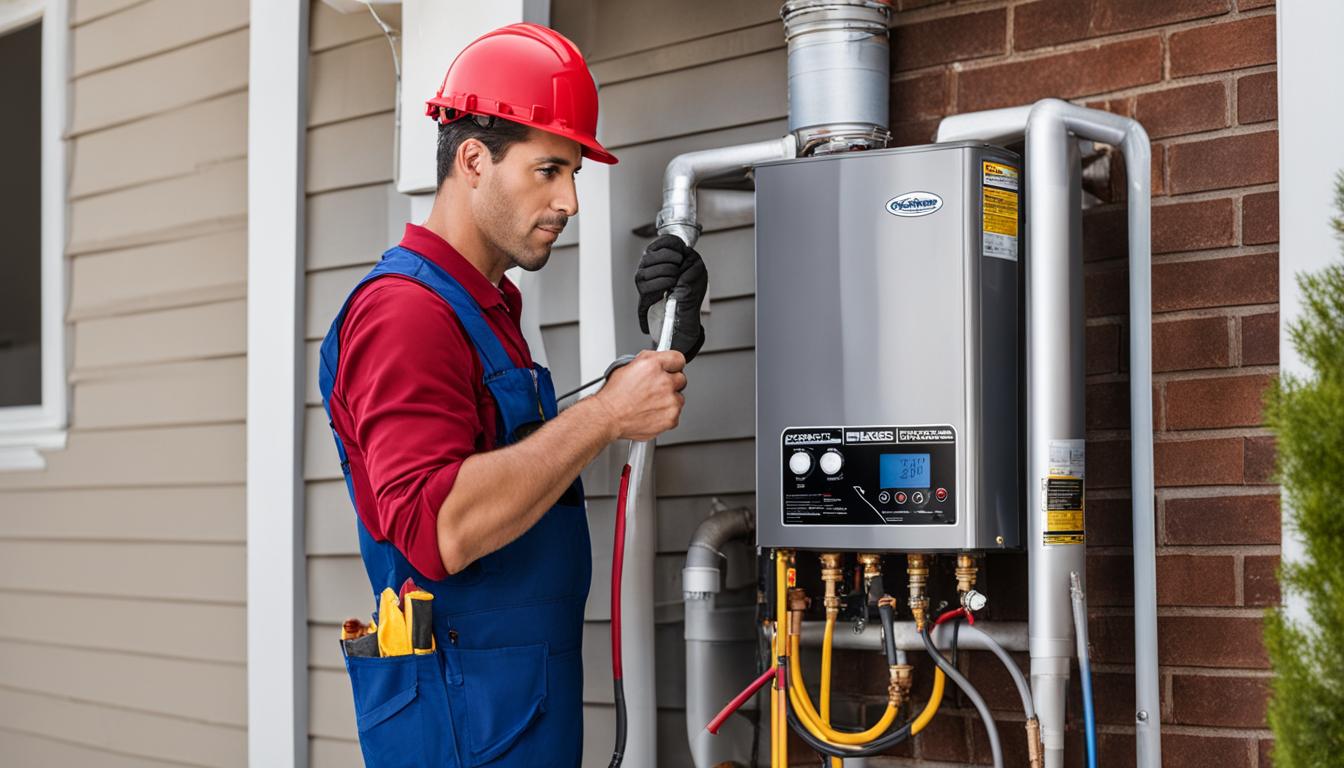
Tankless water heaters run efficiently for years, but they aren’t maintenance-free. Because there’s no storage tank buffering the system, hard water minerals build up directly on the heat exchanger, and left unchecked, that scale buildup is what causes lost efficiency, error codes, and early system failure. It’s one of the systems the HF Home team keeps an eye on during routine property visits, since it’s easy to overlook until hot water stops showing up on demand.
Tankless vs. Tank Water Heater Maintenance: Key Differences
Understanding how tankless units differ from traditional tank-style systems explains why the maintenance approach isn’t interchangeable:
| Maintenance Feature | Tankless Water Heater | Traditional Tank Water Heater |
| Primary Risk Area | Scale buildup on the heat exchanger | Sediment accumulation at the bottom of the tank |
| Service Frequency | Every 6–12 months, depending on water hardness | Annually, flush sediment, inspect anode rod |
| Primary Service Task | Descaling / flushing the heat exchanger | Draining and flushing the tank |
| Key Component Check | Inlet filter screen and venting | Sacrificial anode rod (replace every 3–5 years) |
| Impact of Neglect | Reduced flow rate and error codes | Loss of capacity, rusting, eventual tank leak |
Why Tankless Water Heater Maintenance Matters
A tank-style water heater has more forgiveness built in, sediment settles at the bottom and the unit still runs. A tankless system doesn’t have that margin. Water passes directly over the heat exchanger every time a tap opens, so any mineral scale goes straight onto the component doing the work. In hard water areas, that buildup reduces heating efficiency, forces the unit to work harder, and can shorten its lifespan within just a few years if it’s never flushed.
How Often to Service a Tankless Water Heater
Most manufacturers recommend descaling a tankless unit at least once every 12 months, but the right interval depends on local water quality:
- Standard municipal water: roughly every 12 months
- Hard water areas (above 7 grains per gallon): every 6 months
- Well water systems: every 6–9 months, with more frequent inlet filter checks for sediment
Skipping this doesn’t cause an immediate problem, it shows up gradually, as slightly less hot water, longer wait times, or a system working harder than it should.
What the Descaling Process Looks Like
Descaling involves isolating the unit, circulating a vinegar-based or manufacturer-approved solution through the heat exchanger to dissolve mineral deposits, then flushing the system clean. It also typically includes cleaning the inlet water filter and checking venting on gas units. The process involves working around electrical, gas, and water connections, which is why it’s a service best left to a licensed technician rather than a weekend DIY project. This is where routine oversight matters more than hands-on DIY: under a private home management membership, a dedicated Home Manager flags when a unit is due for service and coordinates a trusted contractor to handle it, rather than the homeowner having to track manufacturer intervals themselves.
Tankless Water Heater Maintenance Checklist
- Flush and descale the unit on schedule
- Clean or replace the inlet water filter
- Inspect venting and intake/exhaust connections for blockage or corrosion
- Check isolation valves and fittings for moisture or mineral crust
- Review stored error codes on the unit’s display
- Confirm water temperature is consistent at the tap
- Keep a record of service dates and any parts replaced
Signs Your Tankless Water Heater Needs Professional Repair
A few signs are worth acting on rather than waiting out:
- Fluctuating water temperature, sometimes described as a “cold water sandwich,” where water starts hot, turns cold, then warms again
- Reduced water flow or pressure at fixtures
- Persistent error codes, particularly around ignition or overheating
- Rumbling or clanking noises, often caused by scale trapping water against the heat exchanger
- Visible moisture or scale at the connection fittings
None of these mean the unit is failing outright, but they’re the kind of early signals that are easy to miss in a property that isn’t checked on regularly, particularly a second home or vacation property where nobody’s running the tap every day.
Water Heater Maintenance for Second Homes and Vacation Rentals
Water heater maintenance matters more when a property sits empty for stretches at a time. A tankless unit in a home you visit every day gets noticed if something’s off. One in a second home in Fairhope, along the coast near 30A, or in a short-term rental doesn’t have that advantage, weeks can pass between visits, which is exactly when small scale buildup turns into a bigger repair right before guests or owners arrive expecting hot water on demand. Regular oversight closes that gap. For a closer look at keeping a coastal property in shape year-round, see our second home maintenance guide for 30A and Santa Rosa Beach.
Frequently Asked Questions
How do you service a tankless water heater?
Servicing a tankless water heater involves isolating the unit, circulating a descaling solution through the heat exchanger, cleaning the inlet filter, and checking venting and connections, typically done by a licensed technician once a year, or more often in hard water areas.
How often should a tankless water heater be serviced?
Most manufacturers recommend descaling once a year, though homes with hard water (above 7 grains per gallon) or well water systems typically need service every 6 months to prevent scale from damaging the heat exchanger.
How do you descale a tankless water heater?
A technician isolates the unit and circulates a descaling solution through the heat exchanger to dissolve mineral deposits, then flushes the system and cleans the inlet filter, a service best handled by a licensed professional given the connections involved.
What are the signs a tankless water heater needs professional repair?
Fluctuating water temperature, persistent error codes, reduced flow, rumbling noises, or visible scale and moisture at the connections are all signs professional service is worth scheduling.
Is tankless water heater maintenance different from tank-style water heater maintenance?
Yes. Tankless units need periodic descaling to prevent scale buildup directly on the heat exchanger, while tank-style units are more focused on sediment flushing and anode rod checks.
Small System, Easy to Forget
A tankless water heater doesn’t warn you the way a leaking tank does, it just quietly loses efficiency until one day the shower runs lukewarm. Nothing forces the descaling schedule onto your calendar, so it slips.
Ready to put it on someone else’s calendar instead? Contact HF Home Maintenance to book a Home Assessment that builds a maintenance plan around your property, one your Home Manager runs, not you.